
As published in Toledo Business Journal - September 1, 2021
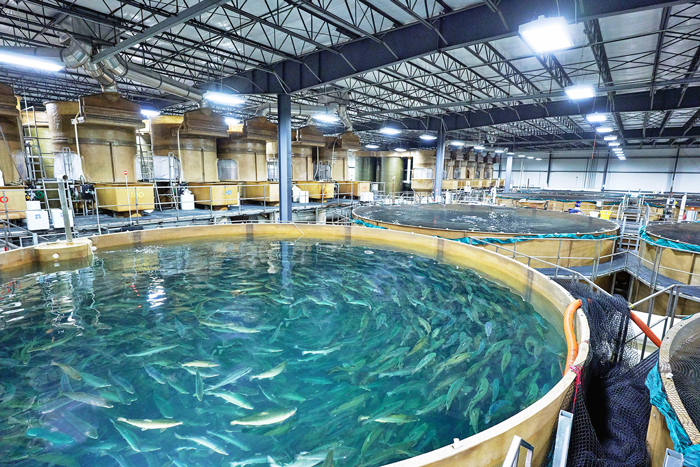
AquaBounty will construct a farm for its genetically engineered salmon
AquaBounty to invest $200M in Pioneer
Company planning to construct a new 479,000 sf large-scale farm
AquaBounty Technologies, Inc. (AQB), a land-based aquaculture company utilizing technology to enhance productivity and sustainability, has identified Pioneer as the location for its planned large-scale farm for the company’s proprietary genetically engineered (GE) salmon.
The new farm will be AquaBounty’s first large-scale commercial facility, with a planned annual production capacity of 10,000 metric tons – approximately eight times the size of its farm in Albany, Indiana, which has an annual production capacity of 1,200 metric tons. The company is finalizing the design for the estimated 479,000 square foot facility and expects to invest over $200 million in the project. Construction is slated to begin in late 2021 and the company anticipates commercial stocking of salmon to commence in 2023. Once in operation, the farm is expected to bring over 100 new jobs to the region.
“We are excited to announce Pioneer, Ohio as the location of our next farm,” said Sylvia Wulf, chief executive officer of AquaBounty. “After an intensive analysis of the site data and the completion of substantial due diligence, Pioneer met our selection requirements. The Village of Pioneer, Williams County, the State of Ohio, JobsOhio, and the Regional Growth Partnership (RGP) have all been a pleasure to work with and are highly supportive of the economic benefits we plan to bring to the community.
“The State of Ohio currently is finalizing a package of economic incentives to support AquaBounty’s location at the Pioneer site, as the plan for the new farm is contingent upon approval of State and local incentives. Details of the site purchase have been agreed upon and we expect to begin construction by the end of the year,” concluded Wulf.
According to the company, the new farm will be incorporating the latest technology and equipment according to the specifications of its technical design team.
“AquaBounty’s GE Atlantic Salmon are raised in safe, secure, and sustainable fish farms in America’s heartland. By recycling more than 95% of our water and removing the solid wastes within the farm, the solid waste can be utilized by local farmers for fertilizer, and/or disposed of in an environmentally and odor free manner,” said the company.
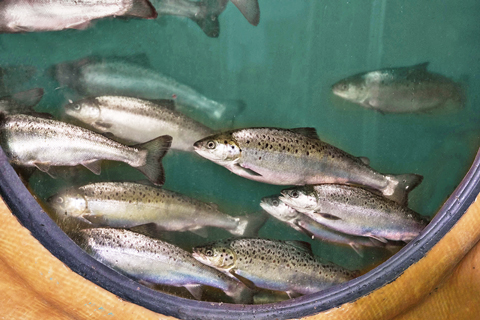
The new farm will be AquaBounty’s first large-scale commercial facility, with a planned annual production capacity of 10,000 metric tons
AquaBounty will supply fresh Atlantic salmon to a variety of customers including seafood distributors, food service operators, and retailers in the US and Canada, noted the company. Its hatchery and broodstock facilities in Prince Edward Island, Canada will provide all the salmon eggs to meet its production needs. The company sells conventional Atlantic salmon eggs, fry, and smolt (non-bioengineered) to conventional salmon farmers in Atlantic Canada. Additionally, AquaBounty is developing scientific and technical support services to market to other land-based fish farmers.
“We have received very positive interest from a variety of customers representing seafood distributors, food service operators, and retailers, and are thrilled that the first harvest is already fully committed. It is gratifying to see that our customer partners understand the many benefits AquaBounty’s Atlantic salmon provide, and that they embrace technology that will bring more food to more people in a cost-effective and sustainable manner,” said Wulf. “With the food service industry quickly regaining momentum toward pre-pandemic activity and with restaurants reopening nationally, we remain very optimistic for the demand for our fish.”
Seafood distributors and food service operators are the company’s initial primary target, noted officials, and other sales channels will follow as it ramps up its harvesting capacity.
“AquaBounty’s decision to choose Ohio for its first large-scale aquaculture facility is more evidence that Ohio is emerging from the pandemic stronger than before,” said J.P. Nauseef, JobsOhio president and CEO. “This investment will bring 112 new jobs to northwest Ohio, further solidifying the region’s role as a national leader in agribusiness production and distribution.”
AquaBounty Technologies, Inc. is in the field of land-based aquaculture and the use of technology for improving its productivity and sustainability. According to the company, its objective is to help ensure the availability of high-quality seafood to meet global consumer demand, while addressing critical production constraints in the most popular farmed species.
The company’s genetically engineered salmon program is based upon a single, specific molecular modification in salmon that results in more rapid growth in early development, noted officials. With aquaculture farms located in Prince Edward Island, Canada, and Indiana, AquaBounty is raising salmon free of antibiotics and other contaminants, in land-based recirculating aquaculture systems (RAS), which are designed to prevent disease and to include multiple levels of fish containment to protect wild fish populations. According to the company, 90% of all farmed Atlantic salmon is currently imported from overseas. AquaBounty’s solution offers a reduced carbon footprint and no risk of pollution of marine ecosystems, as compared to traditional sea-cage farming.
“Aquaculture is the solution to bridging the seafood gap in supply. More fishing is not the answer. By 2050, the global population is expected to grow to between 9 and 10 billion. AquaBounty is helping meet the growing global demand for animal protein with a safe, secure, and sustainable Atlantic salmon raised on freshwater, land-based farms close to major markets in North America,” said the company.
According to AquaBounty, it is the first and only company in the world to raise and market a genetically engineered Atlantic salmon approved by the US Food and Drug Administration (FDA) and Health Canada. AquaBounty provides all information necessary to meet the National Bioengineered Food Disclosure Law (BE) disclosure and any applicable food labeling requirements.
“This new farm will allow AquaBounty’s fresh, clean salmon to reach more markets in less time and help feed a growing population,” said the company.
Although AquaBounty is only now beginning to bring its innovative, fast-growing Atlantic salmon to market, it has 30 years of experience in raising these fish, noted the company.